Panacea Bio Chem — Compound Monograph
Resveratrol: the polyphenol sirtuin-activator (SIRT1), longevity and cardioprotective science

Resveratrol — trans-3,5,4′-trihydroxystilbene — is a plant polyphenol of the stilbenoid family, made by grapevines and other plants as a stress and defence molecule and familiar from grape skin and red wine. Its scientific fame rests on a single finding: in a 2003 screen it emerged as one of the most potent small-molecule activators of the sirtuins, and in particular SIRT1 — the NAD+-dependent enzymes tied to metabolism, stress resistance and lifespan. That put resveratrol at the centre of longevity and cardioprotective research as a proposed caloric-restriction mimetic. Yet the molecule is chemically delicate: poorly water-soluble, light-sensitive, oxidation-prone and very rapidly eliminated from the body. This monograph reviews what resveratrol is, its sirtuin biology, the French-paradox story, the bioavailability frontier, and why stable formulation of a fragile polyphenol is a problem worth solving — the sphere Panacea Bio Chem researches.
Keywords: resveratrol · trans-resveratrol · stilbenoid polyphenol · sirtuin activator (STAC) · SIRT1 · NAD+ · caloric-restriction mimetic · longevity & healthspan · cardioprotection · French paradox · red-wine polyphenol · Japanese knotweed (Polygonum cuspidatum) · resveratrol bioavailability · polyphenol preservation.
1. What resveratrol is — in plain language
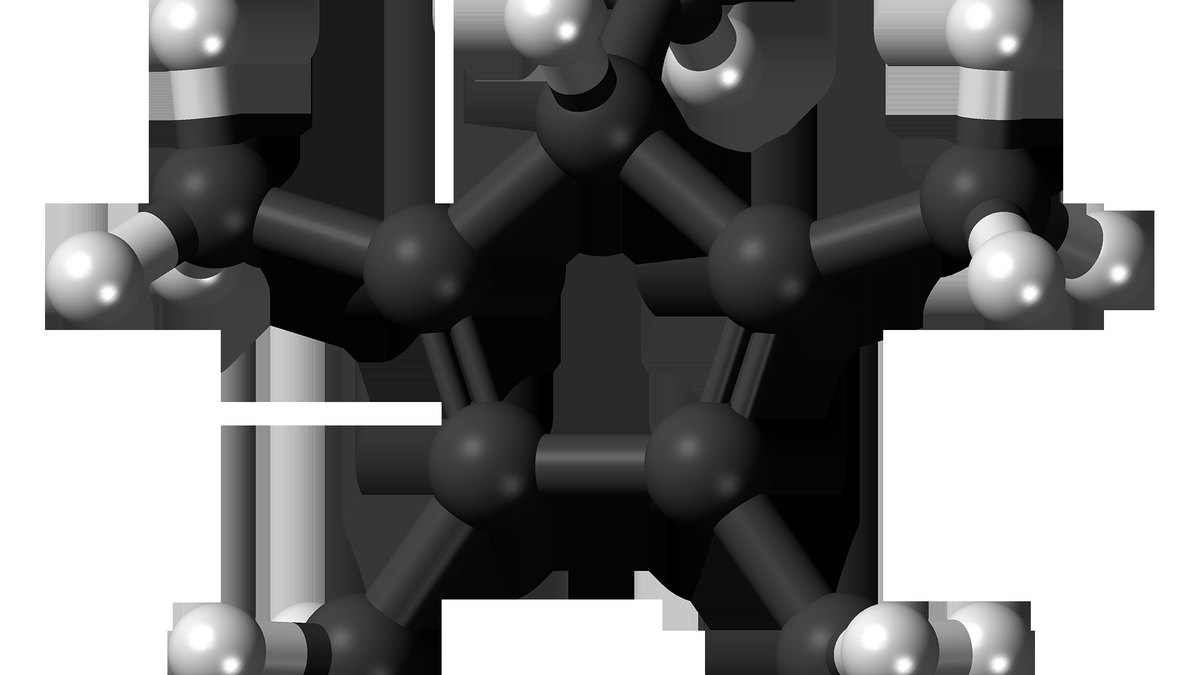
Resveratrol1 is a small molecule that plants make when they are under attack — by fungi, ultraviolet light or injury. Chemically it is a stilbenoid2: two aromatic rings joined by a short two-carbon bridge, decorated with three hydroxyl groups. That hydroxyl-rich structure is what makes it a polyphenol, the same broad family that colours and flavours much of the plant world. Grapevines concentrate it in the skin of the grape, which is why it travels into red wine; it is also found in peanuts, some berries, and — most richly of all — in the root of Japanese knotweed (Polygonum cuspidatum), the usual commercial source.
Resveratrol exists in two geometric forms. The trans form is the stable, biologically favoured one; the cis form appears when the molecule is exposed to light. This detail matters more than it sounds: because the useful form can flip in daylight, how resveratrol is handled and stored shapes how much of the active molecule actually survives to be studied.
2. The sirtuin connection — SIRT1
Resveratrol would be a minor botanical curiosity but for one discovery. In 2003, a laboratory screen searching for small molecules that switch on the sirtuins — a family of enzymes that use NAD+ to strip acetyl groups off proteins and tune metabolism, stress response and gene silencing — found that resveratrol was among the strongest hits3. Compounds in this class were named STACs (sirtuin-activating compounds), and resveratrol became the archetype.
The enzyme that drew the most attention was SIRT14, the best-studied mammalian sirtuin. SIRT1 sits at the crossroads of energy sensing: when a cell experiences scarcity it deacetylates a roster of targets that shift the cell toward repair, fat metabolism and stress resistance. Because caloric restriction — eating markedly less without malnutrition — is the most robust intervention known to extend lifespan across yeast, worms, flies and mice, a molecule that appeared to switch on the same machinery was electrifying. Resveratrol was proposed as a caloric-restriction mimetic: a way to borrow some of fasting's biology from a bottle. Crucially, sirtuins spend NAD+ to work, which ties resveratrol's story directly to the cell's NAD+ economy.
3. A story: the French paradox
The modern interest in resveratrol has a memorable origin. In the early 1990s epidemiologists puzzled over the French paradox5: parts of France recorded relatively low rates of coronary heart disease despite a cuisine generous in butter, cheese and other saturated fats. The French physiologist Serge Renaud put the observation on the map, and a 1991 American television segment turned it into a household phrase. One favoured candidate for the protective factor was the polyphenols of red wine — and resveratrol, present in grape skin and passed into red wine during fermentation, became its poster molecule.
The paradox is best treated as a hypothesis-generating story rather than a proof: diet, lifestyle, measurement differences and the modest resveratrol content of wine all complicate the picture. But it did something valuable — it pointed a generation of chemists and biologists at a single, elegant plant molecule and asked what it really does. That question is still being answered.
| Property | Detail | Why it matters |
|---|---|---|
| Chemical class | Stilbenoid polyphenol (trans-3,5,4′-trihydroxystilbene) | Plant defence metabolite; hydroxyls drive its chemistry |
| Richest sources | Japanese knotweed root; grape skin & red wine; peanuts; some berries | Knotweed is the usual commercial source |
| Molecular target studied | Sirtuins / SIRT1 (NAD+-dependent) | Basis of the longevity & metabolic interest |
| Active form | trans-resveratrol (converts to cis in light) | Handling & storage govern how much stays active |
| Handling challenge | Low water solubility; light- & oxidation-sensitive; rapid metabolism | Bioavailability is the central frontier |
4. The open frontier — bioavailability
Here is the puzzle that keeps resveratrol interesting. In cells and in laboratory animals it does striking things6; in the human body, the free molecule is notoriously hard to keep around. Resveratrol is absorbed well enough, but the gut wall and liver conjugate it almost immediately into glucuronide and sulfate forms and clear it, so that unmodified resveratrol reaches only low concentrations in blood and has a short half-life. It is also poorly water-soluble, and — as noted — the active trans form is light- and oxidation-sensitive.
This gap between potent test-tube activity and fragile real-world exposure is sometimes called the resveratrol paradox, and it has turned formulation into the frontier. Much of the field's effort now goes not into finding new effects but into delivering the molecule intact: protecting it from light and oxygen, improving its solubility, and holding it in stable solid forms so that what is measured out is what actually reaches the tissue. A polyphenol that has quietly oxidised or isomerised on the shelf is a poor subject for any experiment.
5. Panacea Bio Chem's angle
Panacea Bio Chem researches this sphere: the preservation and stable formulation of fragile, oxidation- and light-sensitive molecules so their integrity survives the journey from source to point of use. Resveratrol sits squarely in that focus — a high-value polyphenol whose usefulness is limited less by what it can do than by how much of the intact, active trans form actually survives. The work treats stabilisation as the core object rather than an afterthought: excluding oxygen and light, improving how a poorly soluble molecule is carried, and drying and holding sensitive material in ordered solid matrices without the heat or shock that quietly degrades it. Panacea refers to its specific stabilised resveratrol formulation internally as resveratrol HW6.
That craft is shared across Panacea's preservation network — the metal- and oxygen-isolating approach of RedoxVault™, isolating a molecule from the redox threat →, most relevant to an oxidation-sensitive polyphenol; the gentle, surfactant-free low-temperature drying of Cryolapse™, freeze-drying the way nature would →; and — because resveratrol's biology runs straight into the cell's NAD+ economy — the redox-cofactor work behind crystalline NAD+, the coenzyme sirtuins spend → and the delivery platform PolyGluNAD™, a redox-delivery platform →. The exact formulation route, parameters and hardware that make a Panacea-grade stable resveratrol (HW6) repeatable remain proprietary to Panacea Bio Chem and are held by Bogdan Dicoias — the outline is here; the recipe stays behind the door.
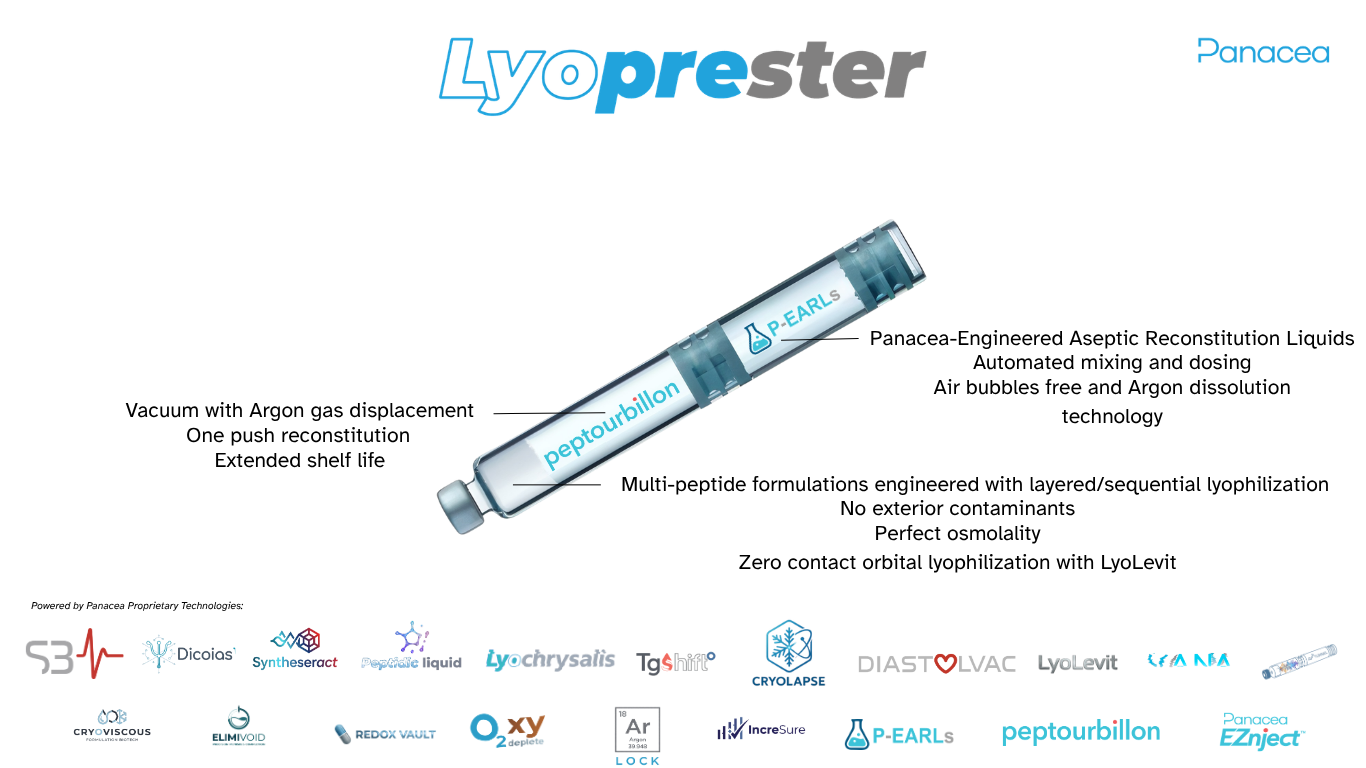
Because the HW6 lineage is chosen for stability, it is a natural fit for Panacea's cartridge platform. A stabilised polyphenol is dried into the upper chamber of a Lyoprester® dual-chamber cartridge as an ordered solid cake, with a matched dose of isotonic P-EARLs™ (Panacea-Engineered Aseptic Reconstitution Liquid) sealed in the lower chamber, so a single twist reunites cake and diluent only at the moment of use. The drying itself is governed by TgShift™ — a glass-transition-shifting method that lets the cake form gently at the cartridge neck, for a longer-lived cake, cleaner reconstitution and preserved bioavailability and binding affinity. For a heavy-loaded, multi-layer cake the RF Tunnel step uses radio-frequency modulation to shrink the middle of the cake during early freezing, opening a channel that lets the P-EARLs wet a dense matrix evenly on reconstitution. The whole cycle — temperature, vacuum and timing — is coordinated by S3Pulse™, Panacea's high-resolution orchestration layer, so the molecule that is measured out is the molecule that reaches the tissue. A blend prepared this way is what Panacea calls a Peptourbillon™.
Resveratrol's biology spends NAD+, so the natural companion to the HW6 lineage is a formulation that carries the polyphenol together with the coenzyme it depends on. PolyGluNAD™ is a Panacea Peptourbillon that co-locates Polydatin 50 mg + NAD+ 200 mg + reduced Glutathione 40 mg in a triple-layered Lyoprester SS (single-shot) cartridge, lyophilised with the RF Tunnel step above. It is built to gather what is beneficial in one cake — supporting the body's clearance of spike proteins and its chelation of heavy metals, alongside the antioxidant tone of its three redox actives.
Explore PolyGluNAD™ — the triple-layer redox Peptourbillon ↗6. Where resveratrol matters most — application fields
Reasoning about where a stable, well-characterised resveratrol could matter most:
The common thread is the one that runs through this monograph: the value of resveratrol is realised only if the active molecule stays intact. Whether the setting is a sirtuin study, a cardiovascular experiment or a well-behaved laboratory standard, a resveratrol that has isomerised or oxidised is worse than useless — it is misleading. Getting the preservation and formulation right is where the biochemistry earns its keep.
7. The human trial record — a large, mixed ledger
Does resveratrol work in humans? The honest starting point is scale. The ClinicalTrials.gov registry lists 253 studies for the search term “resveratrol” (count retrieved 5 September 2026)7 — few supplement molecules have been taken into the clinic so often. The ledger begins with the two findings that launched the field: the 2003 screen that made resveratrol the archetype sirtuin-activating compound3, and the 2006 study in which resveratrol improved the health and survival of mice on a high-calorie diet6. Between those beginnings and today lies the contest the evidence box above describes: whether the early activation was an artefact of the assay, whether it runs indirectly through pathways such as AMPK, and whether doses that act in a dish or a mouse resemble anything a person can absorb. The fairest one-line reading of two decades of human research is the registry number itself — heavily studied, genuinely mixed, still open. A count of studies measures attention, not outcome.
One branch of the field asked a formulation question rather than a pharmacology one: does nature's own modified form of the molecule handle better? Resveratrol's natural glucoside, polydatin (piceid), carries a single glucose on one of resveratrol's reactive hydroxyls, and a comparative study in vivo examined how the two molecules differ in mutual transformation and antioxidative effect8. That glucoside — the more water-soluble, steadier cousin — has its own monograph at polydatinhw6.com — resveratrol's glucoside →.
Frequently asked
What is resveratrol?
Resveratrol is a stilbenoid polyphenol — a small plant
defence molecule from grapevines, Japanese knotweed, peanuts and some berries, familiar
from grape skin and red wine. In the laboratory it activates the sirtuin enzyme SIRT1,
which is why it is studied in longevity and cardiovascular research. Its active form is
trans-resveratrol.
How does resveratrol relate to sirtuins and SIRT1?
A 2003 screen identified
resveratrol as one of the strongest small-molecule activators of sirtuins (STACs) — NAD+-
dependent enzymes that tune metabolism and stress response. By engaging SIRT1 it was
proposed to mimic some effects of caloric restriction. The mechanism and its human
relevance are still actively researched.
What is the French paradox?
The observation that parts of France had
relatively low coronary heart disease despite a saturated-fat-rich diet. Popularised in
the early 1990s, it drew attention to red-wine polyphenols such as resveratrol as a
possible factor. It is a hypothesis-generating story, not a settled explanation.
Why is resveratrol's bioavailability worth solving?
Resveratrol is absorbed
but rapidly conjugated into glucuronide and sulfate forms and eliminated, so the free
molecule reaches low blood levels. It is also poorly water-soluble and light- and
oxidation-sensitive. Stable formulation that protects the intact molecule is central to
studying it — the problem Panacea Bio Chem researches.
Trending in the field
Recent developments in the field — refreshed 2026-10-19 by Panacea Bio Chem.
- Resveratrol Pretreatment and Decabromodiphenyl Ethane-Associated Hepatorenal Changes in a High-Dose Female Mouse Model: Redox Changes and Ferroptosis-Associated Markers — PubMed, 2026 Oct
- The effect of resveratrol on the hippocampus in the pentylenetetrazol (PTZ) - dependent kindling model of epilepsy — PubMed, 2026 Oct 11
- Effects of resveratrol supplementation on inflammatory and oxidative stress biomarkers in metabolic disorders: a systematic review and dose-response meta‑analysis of randomized controlled trials — PubMed, 2026 Oct 17
- Resveratrol as an immune checkpoint inhibitor to enhance the efficacy of breast cancer immunotherapy — PubMed, 2026
References & further reading
- Resveratrol. Wikipedia.
- Stilbenoid — the plant polyphenol family. Wikipedia.
- Howitz KT, Sinclair DA, et al. Small molecule activators of sirtuins extend Saccharomyces cerevisiae lifespan (Nature, 2003). PubMed.
- Sirtuin 1 (SIRT1). Wikipedia.
- French paradox. Wikipedia.
- Baur JA, Sinclair DA, et al. Resveratrol improves health and survival of mice on a high-calorie diet (Nature, 2006). PubMed.
- ClinicalTrials.gov registry search for “resveratrol” — 253 listed studies (count retrieved 5 September 2026). ClinicalTrials.gov.
- Wang HL, Gao JP, Han YL, et al. Comparative studies of polydatin and resveratrol on mutual transformation and antioxidative effect in vivo (Phytomedicine, 2015). PubMed.